Behind the Scaffolding: How Via Paolo Sarpi’s Massive Social Housing Project is Redefining Milan’s Chinatown
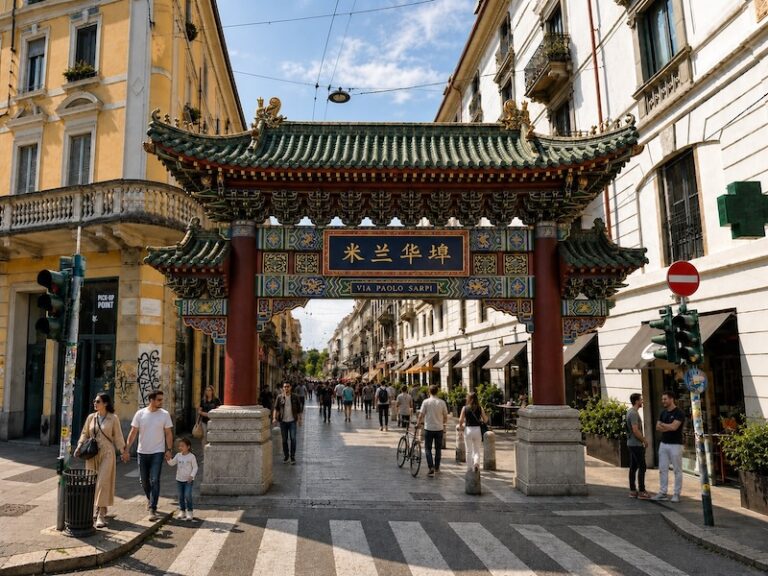
Walk down Via Paolo Sarpi today, and amidst the scent of steaming baozi, trendy bubble tea shops, and the vibrant hum of Milan’s iconic Chinatown, you cannot miss the colossal scaffolding at the intersection of Via Bramante and Via Niccolini. This is not just another luxury condominium rising in a city currently plagued by skyrocketing real estate prices. It is one of Milan’s most ambitious urban regeneration efforts.

As reported by the urban development blog Urbanfile: a €40 million social housing project designed to reshape the socio-economic fabric of the Porta Volta neighborhood. Expected to deliver around 200 new apartments — primarily dedicated to long-term, subsidized rent —this massive construction site represents a crucial cultural battleground between hyper-gentrification and community preservation.
Preserving the Shell, Revolutionizing the Soul
The architectural firm leading the project, Barreca & La Varra, faced a highly unique cultural challenge: how do you modernize a densely packed, historically significant 1900s block without erasing its soul? Their solution is to deliberately retain the original external facades facing the main streets, preserving the familiar, slightly anonymous, yet deeply comforting early 20th-century aesthetic that locals have known for generations.

However, behind these historic walls, the interior is undergoing a radical transformation. The outdated internal building blocks have been entirely demolished to make way for highly efficient, modern living spaces built around three expansive, interconnected courtyards. Historically, Milanese courtyards were the beating heart of communal life. By reviving this layout, the development actively fosters social integration, creating shared spaces that will be accessible not just to residents, but to the wider neighborhood. The ground floor is also dedicated to extensive commercial spaces, ensuring that Sarpi’s bustling identity — where historic Italian bottegas stand shoulder-to-shoulder with thriving Chinese-owned enterprises remain fully intact.


Fighting Gentrification in a High-Stakes Market
Culturally, Via Sarpi is a beautiful anomaly in Milan. It is an area that has miraculously absorbed waves of global and local change—from the highly debated pedestrianization of the street to the boom of ethnic commerce—without completely succumbing to the sterile, displacing gentrification seen in other central districts. This social housing initiative is a structural reinforcement of that neighborhood resilience.
In a city where the severe housing crisis regularly forces working-class residents and young professionals into distant suburbs, this project offers a vital lifeline. By introducing rent-controlled units directly into the city center, InvestiRE SGR and the Fondo Ca’ Granda are actively fighting demographic displacement. Furthermore, the development holds a profound philanthropic core, including plans to host temporary housing for families with children undergoing critical medical treatments at local hospitals.

Voices from the Street: Progress vs. Disruption
Of course, an intervention of this magnitude does not come without growing pains. As the heavy construction persists, the local community’s reaction is a complex mix of logistical frustration and profound anticipation. For local business owners operating in the tightly packed pedestrian zone, the dust, noise, and rerouted logistics are daily hurdles, adding significant strain to the already complex loading and unloading operations of Sarpi’s dense commercial ecosystem.
Yet, the overriding sentiment among everyday residents is one of genuine hope. Middle-class workers and young families eagerly await the release of these subsidized units, viewing them as a rare opportunity to remain in a city where standard salaries struggle to keep up with soaring living costs. Neighborhood forums frequently echo the same sentiment: the heart of Milan cannot solely belong to the ultra-wealthy. Maintaining a diverse demographic is essential for keeping the neighborhood’s authentic, multicultural charm alive.

Ultimately, this transformation is much more than an architectural facelift; it is a powerful cultural statement. By blending historic preservation with progressive social policy, Milan is proving that urban regeneration does not have to mean displacing the vulnerable. When the scaffolding finally comes down, Via Sarpi will not just look familiar — it will breathe new life into the true, inclusive spirit of the city.