From onion fields to dumpling houses — how a humble Milanese market district grew into the city’s most vibrant Chinatown.
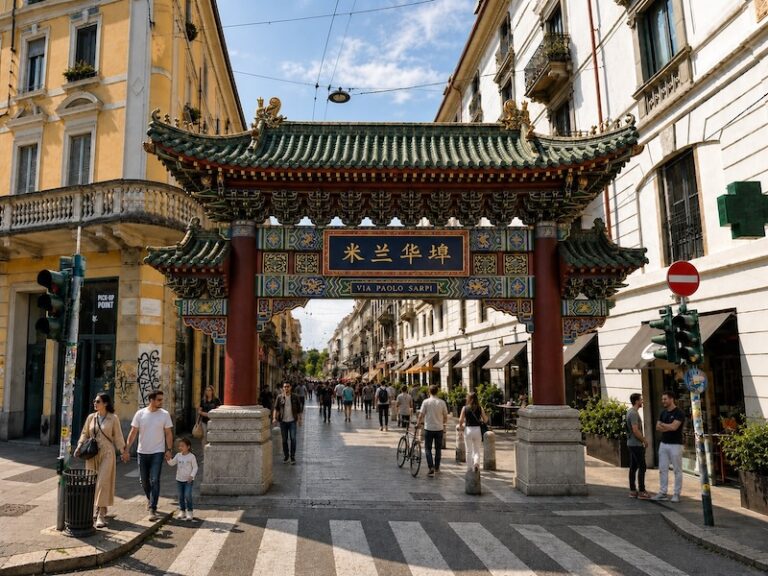
Via Paolo Sarpi isn’t just a street — it’s the beating heart of Milan’s Chinatown (Wikipedia), and arguably the most vibrant, multicultural corner of the city. This pedestrianised stretch in the Sarpi district hums with authentic Chinese restaurants, bubble-tea counters, independent shops and a steady daily buzz that draws tourists and locals alike. Come for the food, stay for the atmosphere.
Walking down Via Paolo Sarpi means stepping into a genuine crossover of Chinese tradition and Milanese style, where century-old shopfronts sit beside sleek cafés and red lanterns hang over classic Milanese facades. It’s one of the few places in the city where East and West share the same pavement — and somehow it just works.

The History: Before It Was Cool
Long before it became Milan’s Chinatown, the neighbourhood went by a far humbler name: “Borg di Scigulatt” (MilanoToday), or “Village of the Onion Makers” in Milanese dialect. There were no dumplings here back then — just market gardens and fields of onions and vegetables supplying the city’s tables. The area was rural, working-class and thoroughly unglamorous.
The street itself took shape in the late 19th century, during Milan’s industrial boom, just beyond the line of the old Spanish walls. It was named after Paolo Sarpi (1552–1623), the Venetian friar, historian and scientist famous for defending the Republic of Venice against papal authority — a fiercely independent thinker, and a fitting namesake for a neighbourhood that has always done things its own way.

In its early decades, Via Paolo Sarpi was a solidly working-class hub, lined with workshops, warehouses and small factories and linked to industrial areas like Sempione and Porta Volta. That hands-on, entrepreneurial character quietly set the stage for the community that would soon reshape the street entirely.
Enter the Dragon: The Chinese Community Arrives
The first Chinese immigrants arrived between the 1920s and 1930s, most of them from Zhejiang province — and specifically the city of Wenzhou (Wikipedia), still the ancestral home of a large share of Milan’s Chinese families today. Many had first come to Europe as labourers in France before making their way south to Milan. They started modestly, as street vendors and small traders, before building a durable local economy around tailoring, leather goods and, later, import-export.
From Workshops to a Cultural Hub
Those first businesses did more than generate income; they anchored a community. As families put down roots, opened shops and brought over relatives, Via Paolo Sarpi gradually shifted from a cluster of workshops into a genuine cultural centre — somewhere to buy Chinese groceries, celebrate Lunar New Year and find a taste of home. Over the decades it grew into the Milan Chinatown we know today, where commerce, cuisine and tradition sit side by side.

The Glow-Up: Pedestrianisation & Urban Renewal
The turning point came in 2011, when Via Paolo Sarpi was pedestrianised after years of debate over traffic and congestion. Freed from cars, the street could finally show off its character. Today, red lanterns, fresh-produce stalls and artisan shops line a walkway where the aroma of Chinese cooking mingles with the everyday rhythm of Milanese life. The makeover didn’t just tidy the street up — it turned Sarpi into a destination.
These days the street is best known for what’s on the plate. Expect hand-pulled noodles and Lanzhou beef soup, Cantonese roast meats, steaming baskets of dim sum, ravioli cinesi (Chinese dumplings), bubble tea and bakeries turning out both Chinese pastries and Milanese classics. Beyond the food, the shops stock everything from imported teas and ceramics to fashion, cosmetics and hard-to-find Asian groceries — making Chinese food in Milan and a good browse equally easy to come by.

Daily Life & Vibes on Via Paolo Sarpi
Sarpi is as much a social space as a commercial one. Locals linger in tea shops, bakeries and modern cafés, while younger crowds spill into the side streets in the evenings, giving the area a lively, youthful energy. This easy blend of old and new — grandparents running long-established shops, Gen Z queuing for bubble tea — is exactly what makes Via Paolo Sarpi such a compelling model of multicultural living in Milan.
Sarpi Today
Today, Sarpi is one of Milan’s most dynamic neighbourhoods — a place where third-generation Chinese-Italian families, longtime Milanese residents and curious visitors all cross paths. New restaurants, bubble-tea spots and concept stores open constantly, and the street regularly goes viral for its food. It has become both a genuine community and one of the city’s favourite places to eat, shop and simply wander.

Why You Should Visit Via Paolo Sarpi
Visiting Via Paolo Sarpi — and tracing its journey from the old Borg di Scigulatt to the beating heart of Chinatown Milan — offers an authentic slice of the city that most visitors never see: excellent Chinese restaurants, lively markets, independent shops and a layered history you can still read in the streetscape. It’s one of Milan’s finest examples of urban transformation and cultural integration, and easily worth an afternoon of your trip.
How to Get There
Via Paolo Sarpi sits just northwest of the city centre, a short walk from the Arco della Pace and Parco Sempione. The nearest metro stops are Moscova on the M2 (green) line and Monumentale on the M5 (purple) line, both a few minutes away on foot. You can also arrive by tram or bus, hopping off around Corso Sempione, Via Bramante or Piazzale Baiamonti. It slots neatly into a day spent exploring the Sempione and Corso Como areas.