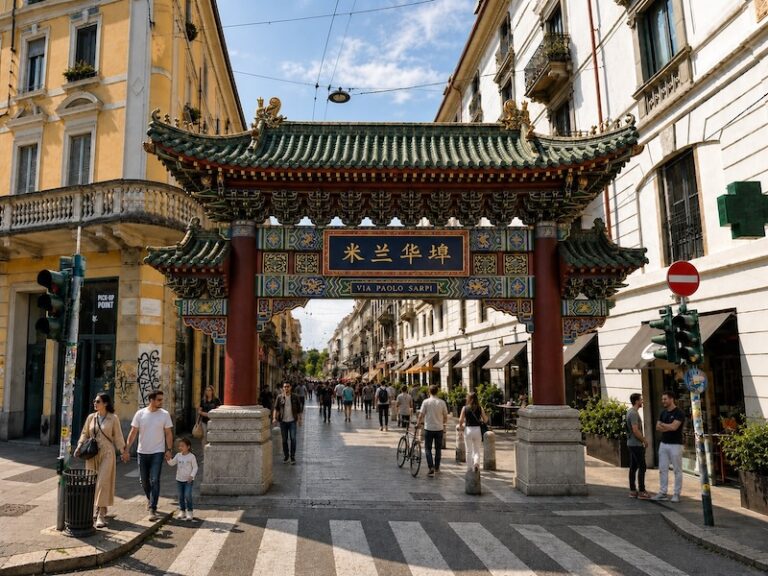
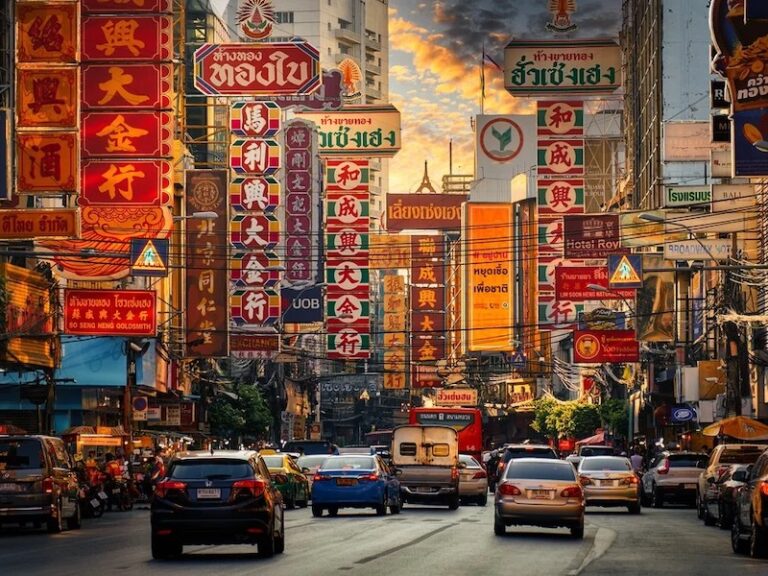
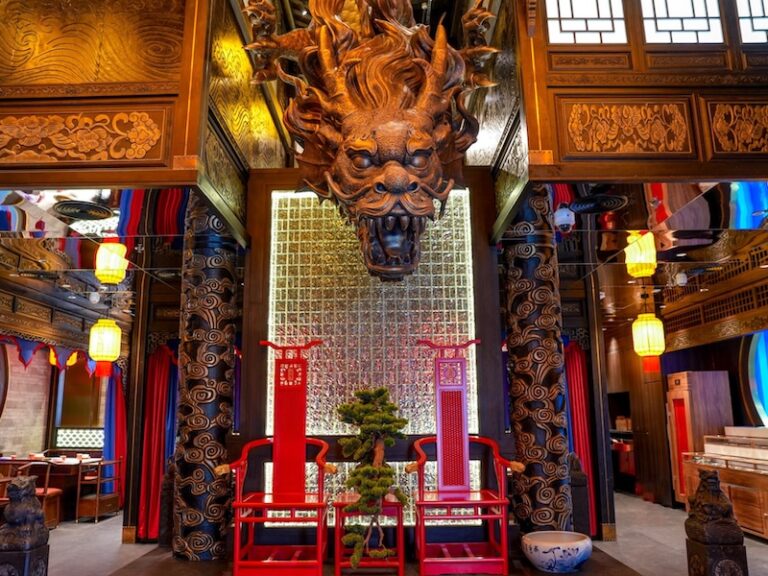
A viral Instagram project transforms NoLo, Via Padova and Piazzale Loreto into a Tokyo-style urban fantasy.
How it all started
Piazzale Loreto has been promised a glow-up for years. Milan’s official plan, LOC – Loreto Open Community, aims to turn one of the city’s most chaotic traffic hubs into a greener, more walkable public square connecting Corso Buenos Aires, Viale Monza and Via Padova. More public space, more trees, more dignity. At least on paper.
But between delays, revisions and the classic Milanese ritual of overthinking and underdoing everything, Loreto has remained suspended between what it is and what it could be.
While the official masterplan crawls through bureaucracy, one person with Wi-Fi, AI tools and a superb aesthetic sense did something faster: he gave the neighborhood a vision before the city gave it a construction site. Like the self-inventing NoLoese (shout out to citizens of NoLo) before him, @nippon_over_loreto took an overlooked corner of Milan and turned it into a fantasy people suddenly wanted to believe in: what if NoLo were in Japan?


Using AI to rework photographs of the neighborhood — the palazzi, the piazzas, the corner shops on Via Padova — the project transposes Japanese visual codes onto thoroughly Milanese architecture. Signs rewritten in katakana. Overhead wires multiplying above the rooftops. A neon glow over the enoteca. An old man on a bicycle who looks like he wandered out of a manga panel.
The buildings are exactly where they’ve always been. The geometry doesn’t change. What changes is the language the city is speaking. And here’s the thing: it works. Disturbingly, convincingly, beautifully well.
NoLo was always a story first, a neighborhood second
Before anyone called it NoLo, this area was a vague in-between: not quite central, not quite peripheral, stretched between Viale Monza, Via Padova, Pasteur and Rovereto. Working-class roots, immigrant communities, small businesses, cheap rents, rough edges. Not much postcard glamour.
Then came the name. NoLo, short for “North of Loreto,” gave the area a new identity. The streets didn’t change overnight, the buildings did not wake up one morning with better façade. But the story changed, and in cities like Milan, stories are infrastructure too.

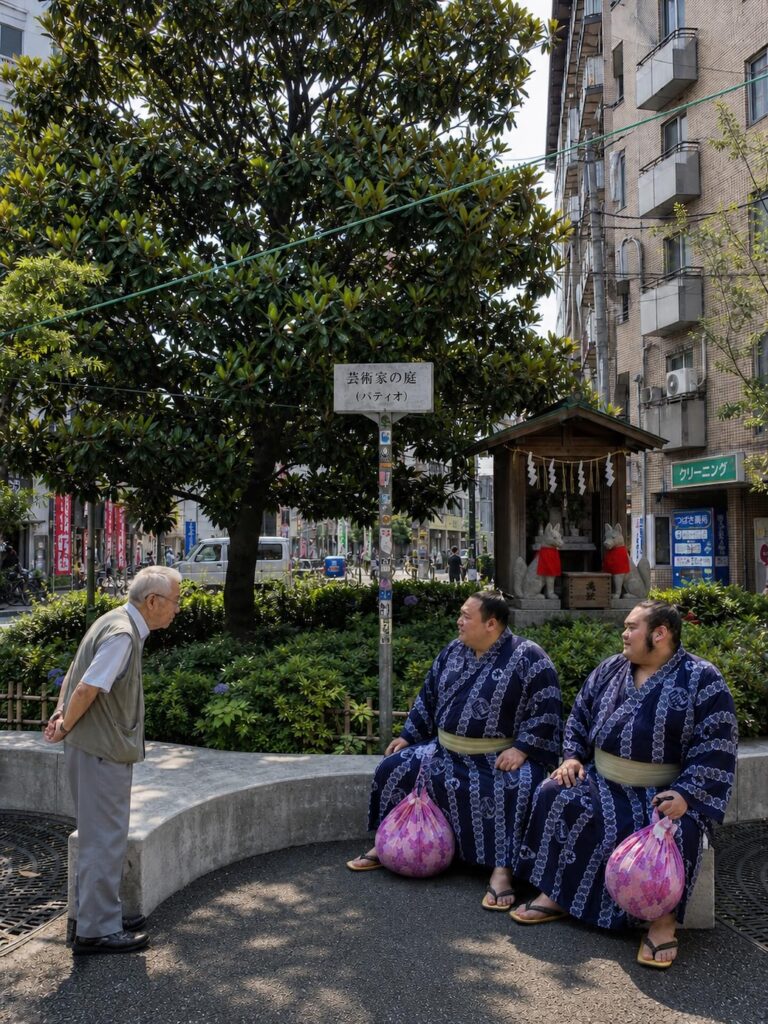
A neighborhood that had long been overlooked became a place people could talk about, photograph, move to, invest in, criticize, romanticize and argue over. That is how urban identity often works: first comes the name, then the myth, then the cafés, the aperitivos with long queues beside the tram tracks, as if urban danger were another part of the neighborhood aesthetic.
The Asia of Nippon Over Loreto is imaginary, but the Asia of this neighborhood is not, it’s one of the highest concentrations of Asian communities in the entire city, including long-established Chinese, Filipino, and South Asian presences living in these dense, layered and lively streets. The Japanese aesthetic does not land on NoLo as an imposition. It lands as a resonance.
The filter already exists in our heads
The creator of the project put it plainly: more and more people travel to Japan and photograph completely ordinary things — vending machines, pedestrian crossings, shop signs — that become extraordinary simply because of where they are. He wanted to know what would happen if you turned that same gaze back on your own neighborhood.


The answer is a cognitive short-circuit that says something true about how we perceive cities. The exotic isn’t a quality a place has. It’s a quality we bring to it. Change the lens, and a street on Via Padova can suddenly look like Shibuya. The magic was never in Tokyo. It was in the way you were looking.
Nippon Over Loreto does something similar to what NoLoese did to NoLo, only faster and stranger. It does not wait for a masterplan, a branding campaign or another public meeting. It points a Japanese lens at the neighborhood and suddenly makes Milanese residents see their own streets as cinematic, desirable and full of possibility.
The Milanese generation that grew up on manga
There’s a generation of Milanese who discovered Japan before Japan was mainstream — through manga and anime, through music, through an aesthetic obsession with precision, seasonality and the care taken over small things. Who saved up for Tokyo the way a previous generation did for New York.
For this audience, the city’s Asian dining and cultural scene isn’t niche. It’s central. The izakayas appearing in the Navigli area, the Hong Kong-style milk tea spots, the proper ramen counters, the occasional kaiseki omakase hidden behind an unmarked door — these aren’t imports. They’re part of how Milan processes its cosmopolitan identity, quietly and without fanfare.
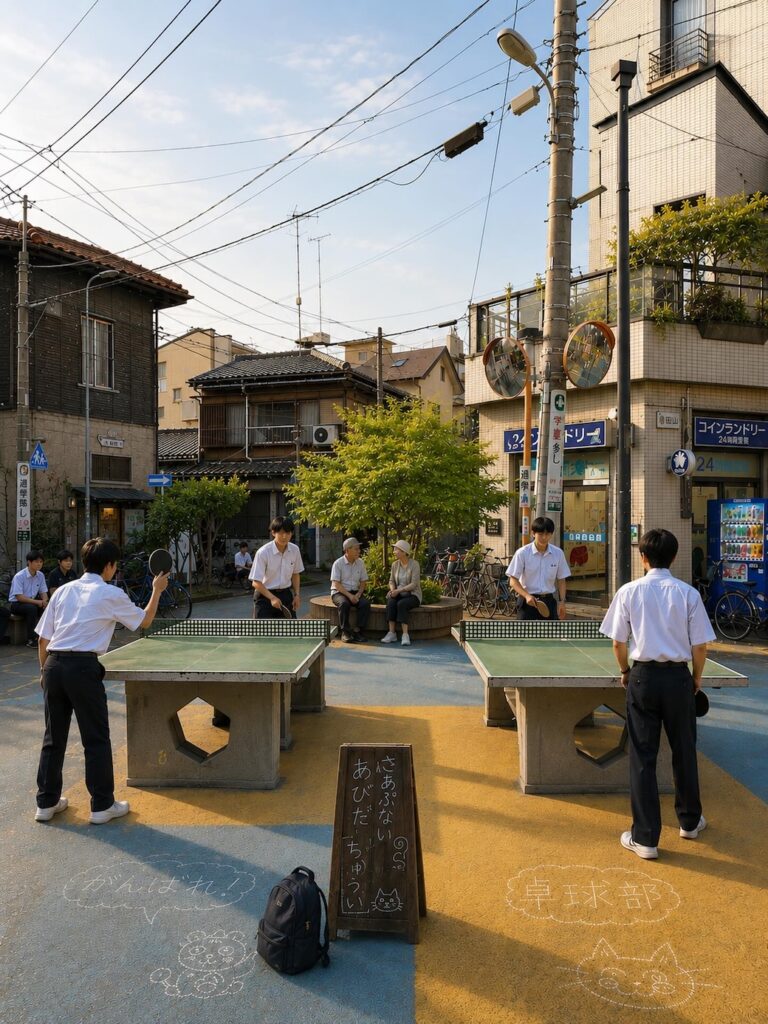

Nippon Over Loreto taps into this directly. Its following isn’t made up of people who find Japan exotic. It’s made up of people who find Japan familiar — and who feel a specific joy in watching that familiarity land on the streets where they actually live.
The glitch is the point
One of the most honest things the creator has said about the project is about imperfection. The AI distorts faces, gets proportions wrong, produces textures that don’t quite exist in nature. When he tries to refine everything too much, he says, something is lost. The first version, errors and all, usually has more depth.
This is, accidentally or not, a very Japanese idea. Wabi-sabi — the aesthetic of the imperfect, the impermanent, the incomplete — is what separates Japanese craft culture from the Western obsession with polish. The glitch becomes the signature. The mistake becomes the texture.
And it’s very NoLo too. The neighborhood isn’t beautiful because it’s perfect — it’s beautiful because it’s rough, layered, contradictory and alive. These AI images understand that better than most glossy redevelopment renderings ever will. They don’t smooth the neighborhood into a beige lifestyle brochure. They let the clutter become atmosphere.

Tokyo is the lens. Milan is what comes into focus.
Milan has always been better at absorbing other cultures than it gets credit for. The city doesn’t announce it loudly — it does it through restaurants, through communities, through the slow accumulation of a neighborhood’s character over years.
Nippon Over Loreto didn’t invent anything. It just finally gave people the right glasses. And it turned out, Tokyo is the lens. Milan is what comes into focus.
Follow the project on Instagram: @nippon_over_loreto — and find the best Asian restaurants and shops in the NoLo area on our neighborhood guide.