A guide to Duanwu Festival, one of China’s most symbolic celebrations, from sticky rice dumplings to dragon boats and the legend of Qu Yuan.
What Is the Dragon Boat Festival?
The Dragon Boat Festival, known in Chinese as Duanwu Jie (端午节), is one of the most important traditional festivals in Chinese culture. It takes place every year on the fifth day of the fifth month of the lunar calendar, which means the date changes in the Western calendar. In 2026, it falls on June 19.
For many people, the festival is instantly associated with two things: dragon boat races and zongzi, the pyramid-shaped sticky rice dumplings wrapped in bamboo leaves. But behind the food and the boats, Duanwu is also a festival about memory, loyalty, protection, summer energy, and the way culture survives by becoming delicious.
The Poet Who Drowned for His Country
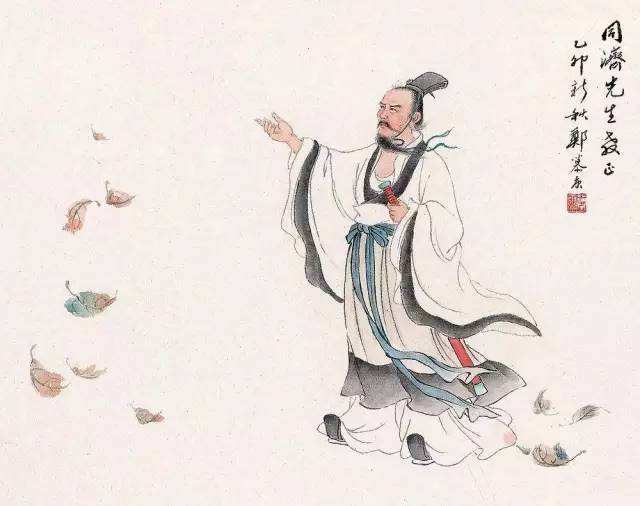
The story behind Duanwu is genuinely one of the best origin myths in any food culture. Qu Yuan (屈原, his wikipedia page), a poet and statesman of the Chu kingdom during the Warring States period (around 278 BCE), was falsely accused of treason and exiled. When he learned his kingdom had fallen to the Qin, he walked into the Miluo River and drowned himself in protest — one of history’s most dramatic acts of political dissent.
The local fishermen who loved him rushed out in boats to find his body, beating drums and splashing oars to scare away the fish. Villagers threw packets of rice into the water so the fish would eat the rice instead of him. Out of that grief — and that very specific act of competitive fish-distraction — a 2,000-year tradition was born.
Every zongzi you eat, every dragon boat that races: it’s all for Qu Yuan.
Zongzi: The Festival Food Everyone Has an Opinion About
粽子 (Zòngzi) are the defining food of this festival, and they are categorically underrated in Western food discourse. Think of them as the original grab-and-go: glutinous rice packed with fillings, wrapped tightly in bamboo or reed leaves, then steamed or boiled until the whole thing takes on the grassy, slightly smoky flavor of the leaf.
The fillings are where regional China goes to war with itself:
- Northern style: simpler, often just red bean paste or a date — sweet, sticky, meditative
- Cantonese style (广式): pork belly, salted egg yolk, shiitake mushrooms, chestnuts — a full meal in bamboo armor
- Southern style: smaller, denser, with the pork marinated overnight and the egg yolk doing heavy flavor work
- Jiaxing (嘉兴) style: the Ferrari of zongzi — pork so fatty and glossy it practically dissolves
Dragon Boats and Summer Energy
Dragon boat racing is the most spectacular public face of the festival. Long narrow boats, decorated with dragon heads and tails, are powered by teams of paddlers moving in rhythm to the sound of drums. The result is part sport, part ritual, part community performance.
The dragon itself is a powerful symbol in Chinese culture. Unlike the fire-breathing monsters of many Western legends, the Chinese dragon is associated with water, rain, strength, protection, and imperial power. During Duanwu, the dragon boat becomes a moving symbol of collective force: many people, one rhythm, one direction.
In modern times, dragon boat racing has become international, with competitions held across Asia, Europe, North America, and beyond. What began as a ritual tied to rivers and local communities has become a global sport and cultural event. Still, the emotional center remains the same: rhythm, water, memory, and shared effort.
What Else Happens on Duanwu
The festival isn’t only rice and boats. A few other traditions worth knowing:
Realgar wine (雄黄酒): Historically drunk to ward off evil spirits and disease — particularly relevant since the festival falls at the start of summer, when insects and illness were historically more common. The “five venomous animals” (snake, centipede, scorpion, lizard, toad) were believed to emerge at this time. Realgar wine was the ancient pest control.
Hanging mugwort and calamus (艾草 and 菖蒲): These aromatic plants are hung over doorways to purify the air and repel bad energy. You’ll see this in traditional households — the smell of mugwort on a hot June day is one of those sense-memory things that hits hard if you grew up with it.
Sachet pouches (香包, xiāng bāo): Small embroidered pouches filled with fragrant herbs, worn or hung as protection. They’re beautiful objects — handmade, often gifted between family members.
The upright egg challenge: At exactly noon on Duanwu, it’s supposedly possible to balance a raw egg on its end. The tradition says that success brings a year of luck.
Dragon Boat Festival in Milan
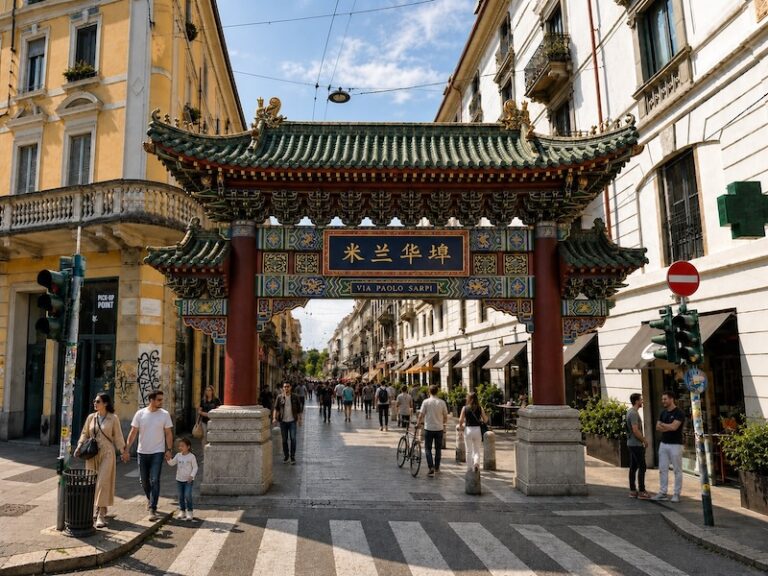
In Milan, the Dragon Boat Festival may not always appear with giant public celebrations, but its spirit is still easy to find. For the Chinese community, it remains a moment of cultural memory, family connection, and seasonal food. For everyone else, it is a beautiful opportunity to learn that Chinese festivals are not only about Lunar New Year and red envelopes.
The best way to experience Duanwu in Milan is simple: look for zongzi in Chinese grocery stores, delis, and restaurants. Chinese supermarkets on and around Via Paolo Sarpi usually stock them, frozen or vacuum-packed, and in some places you can even find freshly made versions throughout the year. Around this period, some restaurants may also offer zongzi to customers for free as a small festive gesture.

Eating zongzi is a small cultural lesson. One bite can tell you about regional differences, family traditions, migration, memory, and the power of stic
For more advanced Chinese food lovers, making zongzi from scratch is the way to go. Although it is a weekend project, but worth doing once. The wrapping technique is genuinely meditative — there are good tutorials in both Italian and Chinese online, and the process of soaking glutinous rice, preparing fillings, and wrestling bamboo leaves into pyramidal submission is oddly satisfying.
Why Duanwu Still Matters
The Dragon Boat Festival endures not because it’s been maintained by institutions but because it’s tied to things people actually feel: grief, loyalty, community, food that takes effort to make. Qu Yuan wasn’t just a poet, he was someone who refused to compromise, and paid for it completely. The act of throwing rice into the river to protect his body is absurd and beautiful in equal measure.
Two thousand years later, a family in Paolo Sarpi is steaming zongzi in a pot that smells of bamboo and soy and five-spice, and somewhere in Hong Kong harbor twenty people are paddling in perfect time to a drum. The festival doesn’t need updating. It already knows what it’s doing.
So this June, if you see zongzi in Milan, try one. Sweet or savory, northern or southern, elegant or messy, it carries a piece of Chinese summer inside its bamboo leaves.
Did you learn something new about this festival? Let us know what you think, and do not forget to bookmark chinatownmilano.it for more Asian culture, food and hidden stories around the city, and follow us on social media @chinatownmilano.it.